
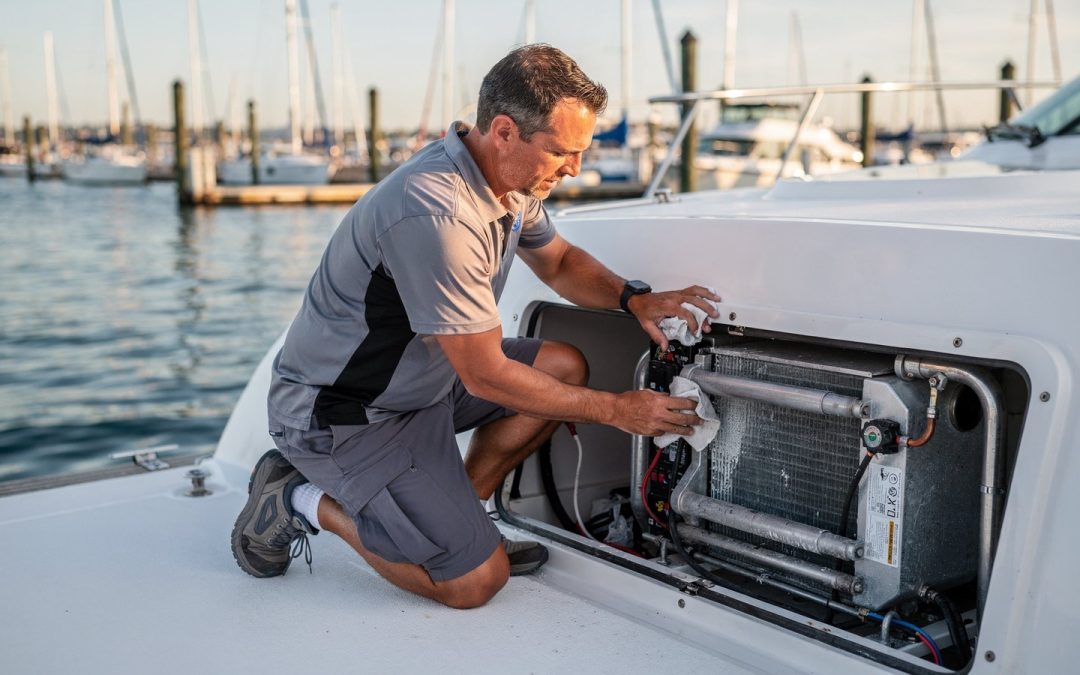
Marine refrigeration maintenance San Diego boat owners can count on comes down to a few seasonal habits: keep the condenser clean and ventilated, protect the battery and wiring, check the seals and drains, and have a specialist verify the refrigerant charge before problems start. Coast 2 Coast Refrigeration provides marine refrigeration repair and service for boat owners across San Diego Bay, Mission Bay, and Shelter Island — and a little maintenance now prevents a dead fridge later.
Why Marine Refrigeration Needs Seasonal Maintenance
Boat refrigeration takes a beating that home appliances never face. Salt air corrodes connections, vibration loosens fittings, and the DC electrical system swings in ways a kitchen fridge never has to handle. Left alone, small issues compound until the box quits — usually on the hottest day of a trip.
Fall is the natural time to get ahead of it. Whether you run year-round in San Diego or you’re slowing down for the cooler months, a seasonal check catches the slow leaks and worn parts before they strand you. Our guide on when and how marine refrigeration should be serviced covers the timing in more depth.
The Seasonal Marine Refrigeration Checklist
Here’s what belongs on every boat owner’s list before the season winds down:
- Clean the condenser and check ventilation. A dust- or salt-caked condenser can’t shed heat. Make sure air moves freely around it.
- Inspect and clean the seals and gaskets. A poor seal makes the unit run constantly and ice up.
- Test battery voltage and connections. Corroded terminals and weak batteries are the top electrical cause of poor cooling.
- Clear the drain and wipe down the box. Standing water and odors point to drainage and airflow issues.
- Listen and feel. A compressor that runs nonstop or short-cycles is telling you it needs attention.
- Verify the refrigerant charge with a pro. If cooling has weakened, you likely have a slow leak that needs a certified tech.
Cleaning and Airflow: The Cheapest Insurance
If you do only one thing, clean the condenser and give it room to breathe. BoatUS points out that marine refrigeration performance depends heavily on ventilation and the system’s ability to reject heat — a unit boxed into a sealed locker will struggle no matter how healthy the rest of the system is.
The same logic applies to the air conditioning side, which many boats share. The BoatUS guide to marine AC maintenance stresses keeping intakes, strainers, and airflow paths clear — the marine equivalent of the dirty-coil problem that sinks so many systems.
Power and Battery Health
Marine refrigeration is only as steady as the power feeding it. A fridge that cools fine on shore power but fades on the hook usually has a battery or wiring issue, not a refrigeration fault. BoatUS highlights voltage drop across undersized or corroded wiring as a frequent culprit on boats.
Check that the house battery holds a charge, terminals are clean and tight, and the charging system is keeping up. Catching a weak battery in the fall is far cheaper than a ruined trip later — and it rules out the most common cause before you ever touch the sealed system.
Schedule Service Today for a seasonal marine refrigeration check before the busy season returns.
When to Call a Specialist vs. Do It Yourself
Cleaning, visual checks, and battery testing are fair game for any capable owner. But the moment the sealed refrigerant system is involved, it’s a job for a certified technician. The U.S. EPA requires Section 608 certification for anyone servicing equipment that could release refrigerant.
Beyond the legal requirement, marine systems demand someone who knows DC power, brand-specific controls, and the realities of working in cramped, salt-exposed spaces. If you spot the warning signs we cover in signs your boat freezer needs repair, bring in a specialist before a small leak becomes a failed compressor.
What a Professional Marine Service Includes
A proper service visit goes well beyond a wipe-down. We inspect and clean the condenser, verify airflow and ventilation, test the electrical and battery side, check seals and drainage, and confirm the refrigerant charge — repairing any slow leak rather than just topping it off. You get a clear report on the unit’s condition and what, if anything, needs attention.
If a recharge is needed, our article on how often marine refrigeration needs recharging explains what’s normal and what signals a leak. You can see the full range of work we handle across our services.
Serving San Diego Marinas
We come to your slip — Shelter Island, Harbor Island, Mission Bay, San Diego Bay, Coronado, and the Chula Vista marinas. Local techs who know these docks and the brands common on San Diego boats make seasonal maintenance simple. See every area we cover on our service areas page.
Frequently Asked Questions
How often should marine refrigeration be serviced?
A seasonal check once or twice a year keeps most systems healthy, plus a professional inspection any time cooling weakens. Fall is a good time to get ahead of problems.
Can I maintain my boat fridge myself?
You can clean the condenser, check seals, and test the battery. Anything involving the sealed refrigerant system requires an EPA-certified technician.
What does a marine refrigeration service cost?
A routine maintenance visit is modest; repairs vary with the issue found. We provide an estimate before any repair work begins.
Do you service boats at the marina?
Yes. We service vessels at the slip across San Diego Bay, Mission Bay, Shelter Island, Coronado, and Chula Vista. Call to schedule a visit to your dock.
Ready to Get Started?
A short maintenance visit now saves a ruined fridge later. Coast 2 Coast Refrigeration keeps your boat’s refrigeration ready for the water.
Schedule Service Today or call us at (619) 288-3842.