
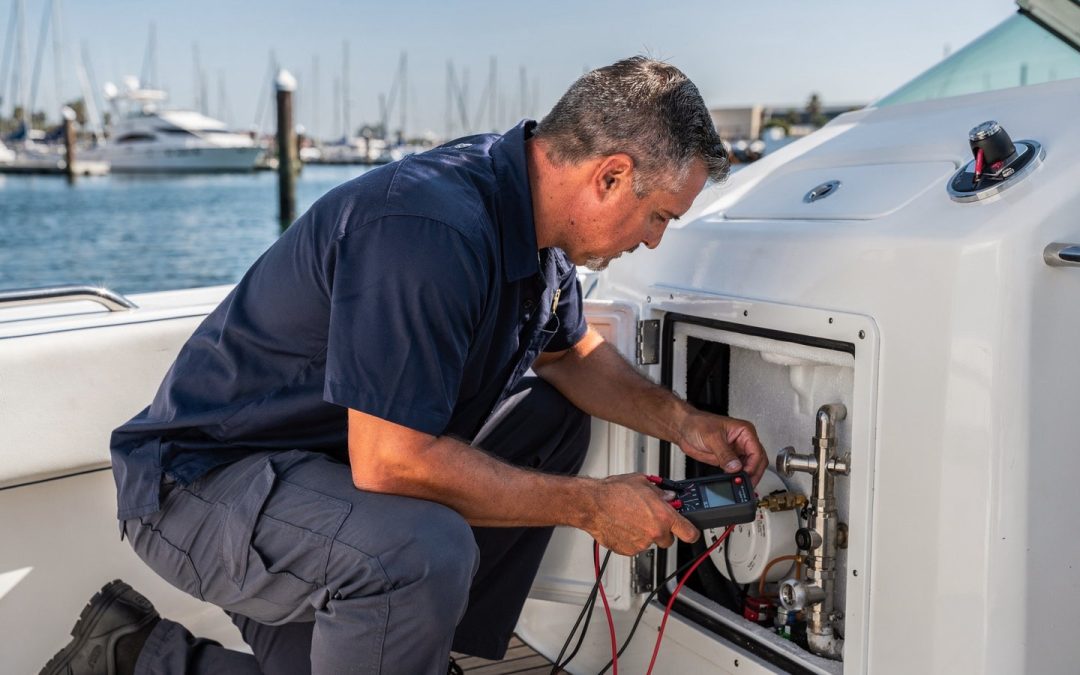
A boat refrigerator not cooling usually points to a power or voltage problem, a low refrigerant charge, a struggling compressor, or a condenser that can’t shed heat in a tight, poorly ventilated compartment. Coast 2 Coast Refrigeration provides marine refrigeration repair for boat owners across San Diego County — diagnosing and fixing the exact reason your unit isn’t holding temperature so your food and drinks stay cold on the water.
Why a Boat Refrigerator Stops Cooling
A boat fridge that hums along but never gets cold is sending a clear signal: something in the cooling chain has broken down. Marine units live a harder life than the fridge in your kitchen. Constant vibration, salt air, swinging battery voltage, and cramped installation spaces all wear on the system over time.
Most “boat refrigerator not cooling” calls trace back to one of a handful of problems:
- Low battery voltage or a power fault. Marine refrigeration is sensitive to voltage. A weak house battery or loose connection can leave the compressor unable to run properly.
- Low refrigerant from a slow leak. Years of hull movement loosen fittings and lines, and the charge bleeds off until cooling fades.
- A failing compressor. The brushless DC compressors in most marine units wear out after heavy use and either run constantly without cooling or quit entirely.
- Poor condenser ventilation. Air-cooled units packed into a sealed locker can’t reject heat, so the box never reaches temperature.
Start With Power: The Most Common Culprit
Before assuming the worst, check the power. Marine refrigerators draw their current from the boat’s DC system, and that system is far less stable than shore power. According to BoatUS, voltage drop across long or undersized wiring runs is one of the most common electrical problems on boats — and a fridge starved of voltage simply can’t cool.
Confirm the house battery is fully charged and holding. Look for corroded terminals, a tripped breaker, or a loose ground. If the unit cools fine on shore power but fails on battery, you’ve narrowed it down to a charging or wiring issue rather than the refrigeration system itself. That distinction saves time and money on the repair.
When It’s the Refrigeration System Itself
If power checks out and the box still won’t cool, the problem is inside the sealed system. Low refrigerant is the usual suspect. Refrigerant doesn’t get “used up” — if the charge is low, there’s a leak somewhere, and recharging without finding it only buys a few weeks before you’re back to a warm fridge.
A compressor that runs nonstop but never pulls the temperature down is often on its way out, especially on units more than seven or eight years old. And sometimes the fix is simpler than it looks: an air-cooled condenser jammed into an unventilated space just needs better airflow. BoatUS notes that marine refrigeration performance depends heavily on adequate ventilation around the condenser and how the system sheds heat.
Why Marine Refrigeration Needs a Specialist
This is the part most boat owners learn the hard way. A regular appliance or home HVAC technician usually can’t help you. Marine systems run on 12V or 24V DC alongside 120V AC, sit in confined spaces, and use components built specifically for the saltwater environment.
There’s also a legal piece. Anyone who opens the sealed refrigerant system has to be EPA certified. The U.S. Environmental Protection Agency requires technicians who service equipment that could release refrigerant to hold a Section 608 certification. A certified marine tech has both the credential and the hands-on experience to work safely below decks. For more on the brand-specific side of this work, see our guide to Dometic marine fridge repair.
Schedule Service Today with Coast 2 Coast Refrigeration and get your boat fridge diagnosed by a tech who actually works on boats.
What It Costs to Fix a Boat Fridge in San Diego
The honest answer is that it depends on the cause. A wiring or voltage fix is at the low end. A refrigerant leak repair and recharge sits in the middle, because the time goes into finding the leak, not just topping off the charge. A full compressor replacement is the most involved repair, and on an older unit it’s worth weighing against the cost of a new system.
What drives the price is diagnosis time, parts availability for your specific brand, and how accessible the unit is on your vessel. A straight-shot install behind a panel is quick; a unit buried under a settee takes longer to reach. Coast 2 Coast gives you a clear diagnosis and an estimate before any work begins, so there are no surprises.
What to Expect When You Call Coast 2 Coast
You’ll talk to someone who asks the right questions up front — brand, symptoms, whether it fails on shore power or battery. That triage often points to the likely cause before a tech ever steps aboard. We then schedule a visit to your slip or marina, test the system end to end, and explain what we find in plain language.
If a recharge is all it needs, you’ll know how often marine systems should be serviced so the same problem doesn’t return — our article on how often marine refrigeration needs recharging covers that in detail. Watch for the early warning signs too, which we break down in signs your boat freezer needs repair.
Serving Boat Owners Across San Diego Bay, Mission Bay & Shelter Island
We work the docks where San Diego boaters actually keep their vessels — San Diego Bay, Mission Bay, Shelter Island, Harbor Island, Coronado, and the Chula Vista marinas. Summer is peak season on the water, which is exactly when a warm fridge is most frustrating and when our marine calls spike.
You can see the full list of areas we cover on our service areas page, and the range of marine work we handle across our services. Local knowledge matters here — we know the marinas, the access challenges, and the brands common on San Diego boats.
Frequently Asked Questions
Why is my boat refrigerator running but not getting cold?
The unit has power but the cooling chain has failed. The usual causes are low battery voltage, a refrigerant leak, a worn compressor, or a condenser that can’t vent heat. A marine tech can pinpoint which one in a single visit.
Can a regular appliance repair company fix my boat fridge?
Usually not. Marine refrigeration runs on DC power, sits in tight spaces, and requires EPA-certified handling of refrigerant. A specialist who works on boats is the right call.
How much does boat refrigerator repair cost in San Diego?
It ranges with the cause — a voltage fix is inexpensive, while a leak repair or compressor replacement costs more. We provide a diagnosis and a written estimate before starting any work.
Do you come to my marina?
Yes. We service boats at the slip across San Diego Bay, Mission Bay, Shelter Island, Coronado, and Chula Vista. Call us and we’ll schedule a visit to your dock.
Ready to Get Started?
Don’t spend the summer with a warm fridge on board. Coast 2 Coast Refrigeration will find out exactly why your boat refrigerator isn’t cooling and fix it right.
Schedule Service Today or call us at (619) 288-3842.